
34 Results for "

Incarvillea lutea Bur. et Franch.

" in MedChemExpress (MCE) Product Catalog:
Products (34)

34 Results for "Incarvillea lutea Bur. et Franch." in MCE Product Catalog:

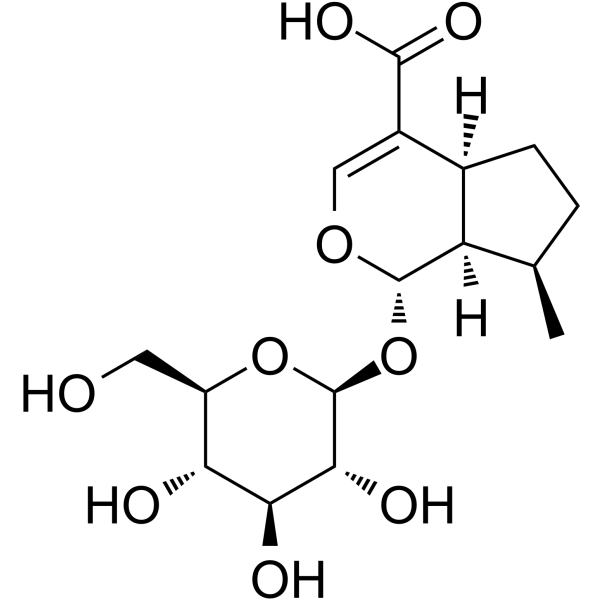
Cat. No.: HY-N2772
CAS No.: 88668-99-9
Synonyms: 7-Deoxy-8-epiloganic acid
8-Epideoxyloganic acid (7-Deoxy-8-epiloganic acid), an iridoid glucoside, can be found in Incarvillea delavayi. 8-Epideoxyloganic acid exhibits weak antinociceptive activity .
loading...
    loading...
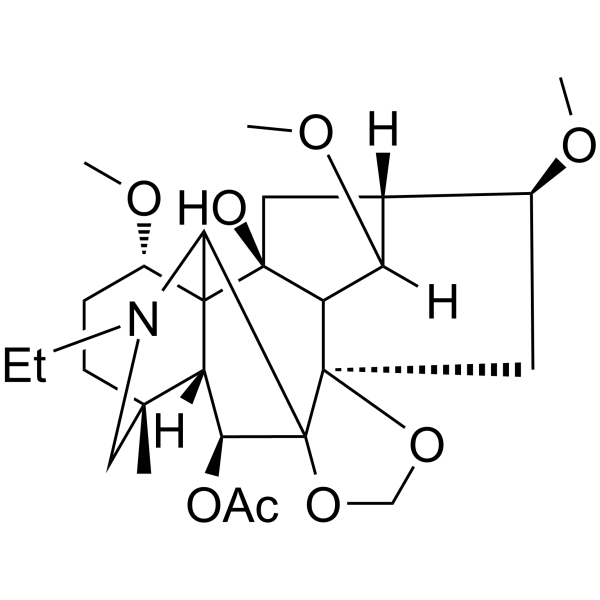
Cat. No.: HY-N0329
CAS No.: 6836-11-9
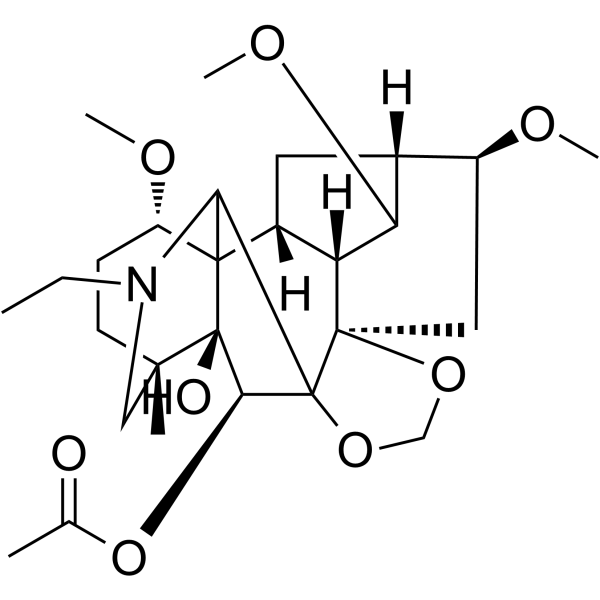
Deltaline is a diterpenoid alkaloid and isolated from plants of the genus Delphinium delavayi Franch. Deltaline itself has analgesic properties, and plants of the genus Delphinium delavayi Franch have also been therapeutically used to treat rheumaticpain, paralysis due to stroke, rheumatoid arthritis .
loading...
    loading...
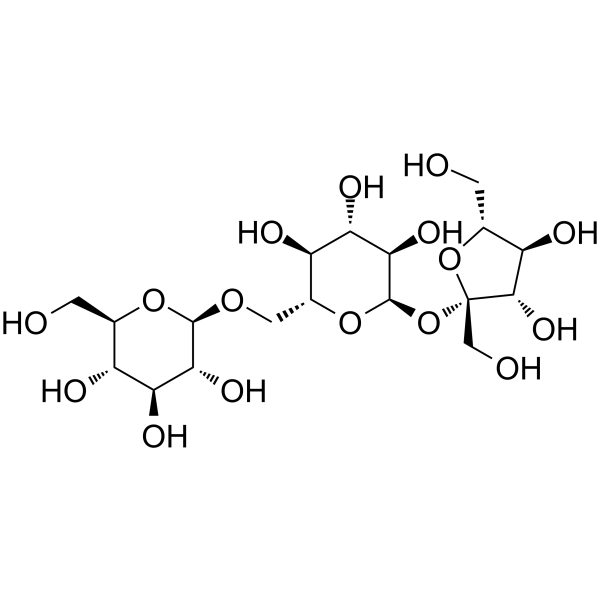
Cat. No.: HY-N8305
CAS No.: 25954-44-3
Gentianose is a predominant carbohydrate reserve found in the storage roots of perennial Gentiana lutea .
loading...
    loading...
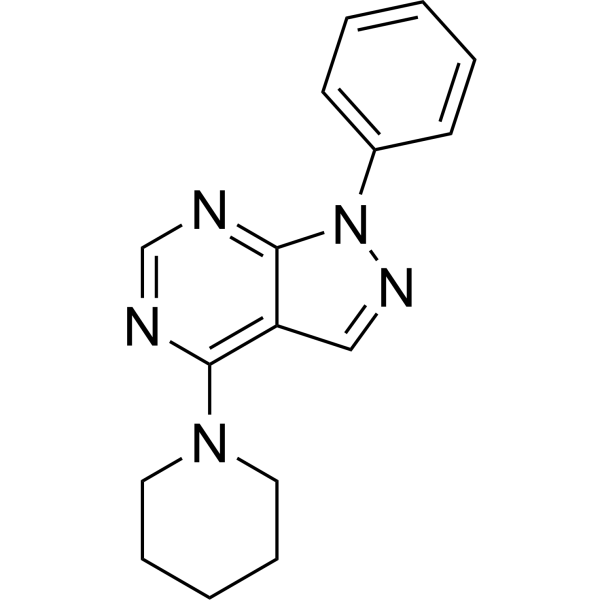
Cat. No.: HY-121025
CAS No.: 23000-46-6
Purity:  99.65%
Target:  

TGF-β Receptor

Research Areas:  

Others

BUR1 is a BMP upregulator (EC50: 98 nM) and activates BMPRII signalling. BUR1 induces BMP2 and PTGS2 expression. BUR1 reversed pulmonary arterial pressure in Monocrotaline (HY-N0750) induced rats .
loading...
    loading...
Cat. No.: HY-W160679
CAS No.: 64700-15-8
Target:  

Bacterial Fungal

Research Areas:  

Infection

7-(Carboxymethoxy)-4-methylcoumarin (Compound VIIIa) is the antibacterial and antifungal agent that exhibits inhibitory activity against S. aureus, B. cereus, S. lutea, C. albicans, C. glabrata, and C. parapsilosis .
loading...
    loading...
Cat. No.: HY-N12718
CAS No.: 95519-12-3
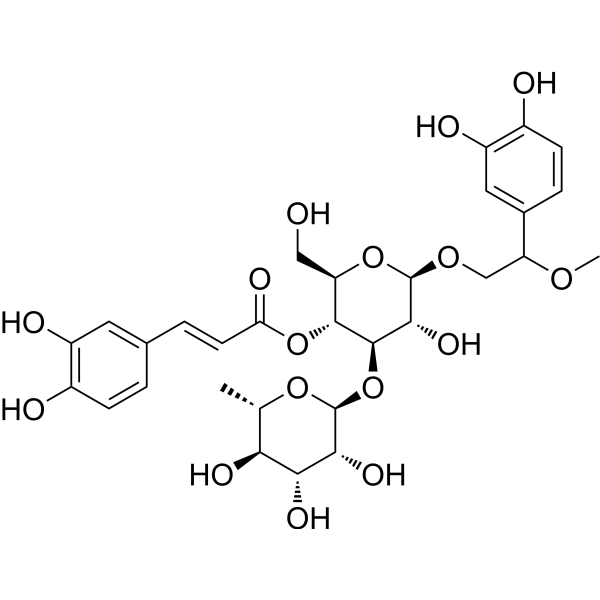
Campneoside I is a bitter phenyl propanoid glycoside. Campneoside I can be isolated from the roots of Incarvillea compacta .
loading...
    loading...
Cat. No.: HY-128222
CAS No.: 21198-79-8
Purity:  ≥95.0%
Synonyms: Hydrazinecarboselenoamide
Target:  

Bacterial

Research Areas:  

Infection Cancer

Selenosemicarbazide (Hydrazinecarboselenoamide) exhibits antimicrobial activity, that inhibits B. subtilis, S. aureus, Klebsiella pneumoniae, Sarcina lutea and Mycobacterium tuberculosis. Selenosemicarbazide forms complex with metal ions, and exhibits antitumor efficacy against cancer cells
loading...
    loading...
Cat. No.: HY-N8083
CAS No.: 109062-00-2
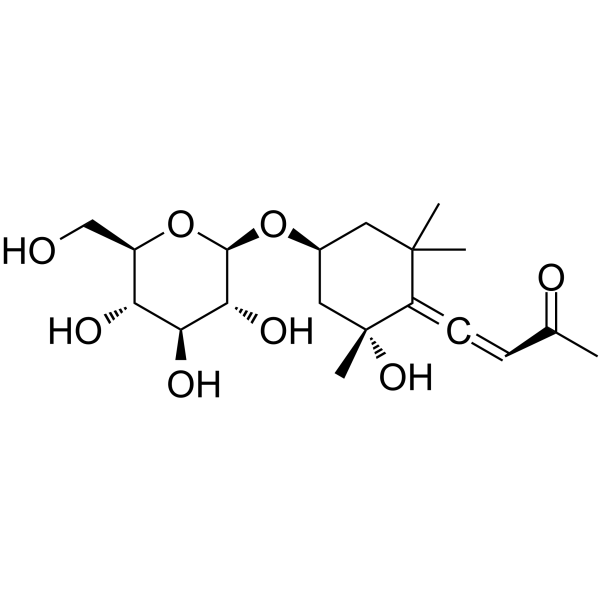
Icariside B1 is a megastigmane glycoside compound isolated from Petasites tricholobus Franch, with an anticancer effect .
loading...
    loading...
Cat. No.: HY-N8401
CAS No.: 907583-51-1
Musellactone is a lactone that can be isolated from Musella lasiocarpa. Musellactone is an antibiotic, that exhibits antibacterial activity against Bacillus megaterium and Sarcina lutea .
loading...
    loading...
Cat. No.: HY-N1945
CAS No.: 929019-25-0
Bonvalotidine A is a lycoctonine-type C19-diterpenoid alkaloid isolated from the roots of Delphinium bonvalotii Franch .
loading...
    loading...
Cat. No.: HY-N12833
CAS No.: 31049-08-8
Dihydrokaempferol-3-O-β-D-glucoside (Compound 3) is a compound that can be isolated from the bark of Cudrania tricuspidata (Carr.) Bur. . Dihydrokaempferol-3-O-β-D-glucoside is an inhibitor of acetylcholinesterase (AChE) .
loading...
    loading...
Cat. No.: HY-N1040
CAS No.: 61597-83-9
Target:  

Others

Research Areas:  

Others

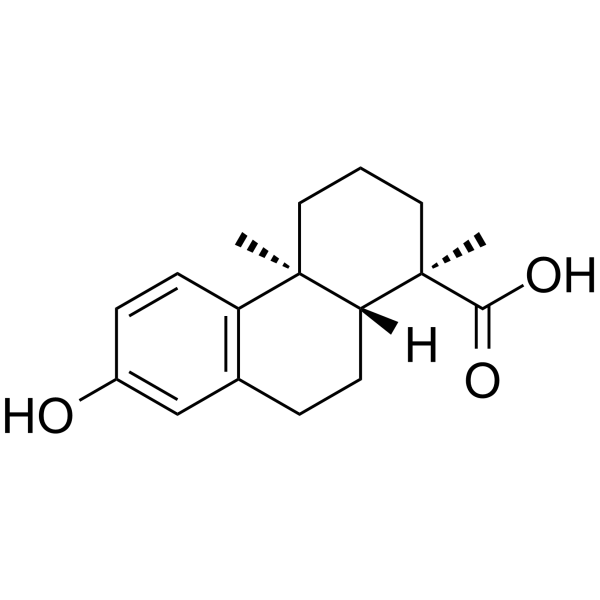
13-Hydroxy-8,11,13-podocarpatriene-18-oic acid is a compound isolated from the bark of Pinus yunnanensis Franch .
loading...
    loading...
Cat. No.: HY-N4051
CAS No.: 32207-10-6
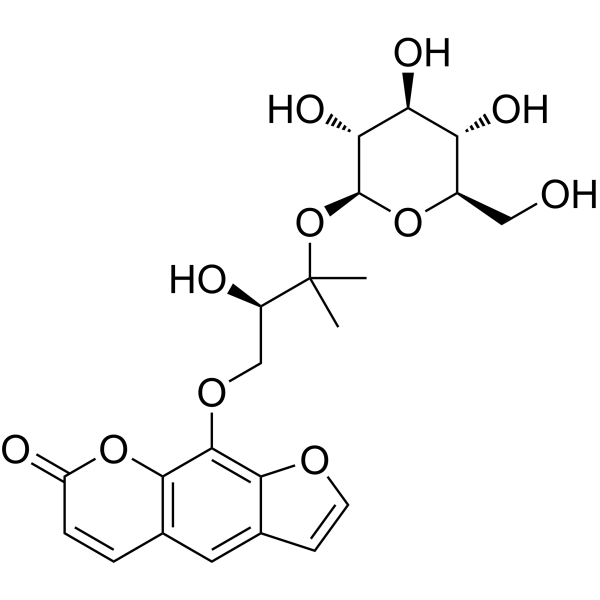
3"-O-β-D-Glucopyranosyl-(2"R)-heraclenol (compound 4) is a natural product from the roots of Heracleum rapula Franch .
loading...
    loading...
Cat. No.: HY-P5562
Target:  

Bacterial

Research Areas:  

Infection

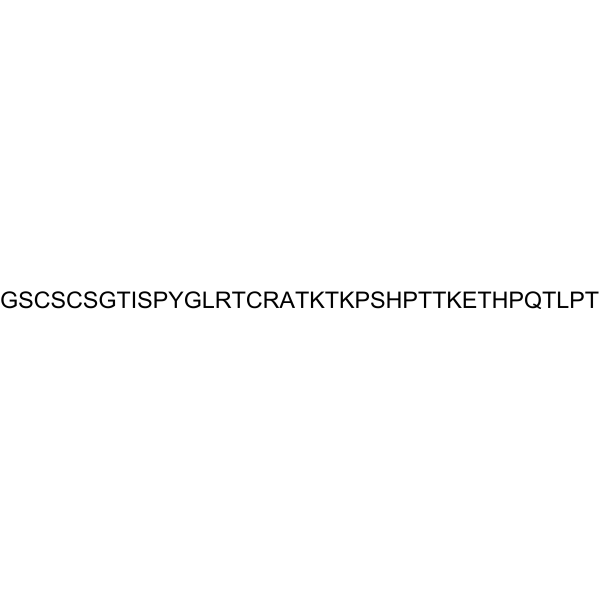
PP102 is an antimicrobial peptide is active against gram-positive B. subtilis (MIC: 25 uM), S. aureus (MIC: 13.3 uM), S. lutea (MIC: 63 uM), and B. pumilu (MIC: 23 uM) .
loading...
    loading...
Cat. No.: HY-P5563
Target:  

Bacterial

Research Areas:  

Infection

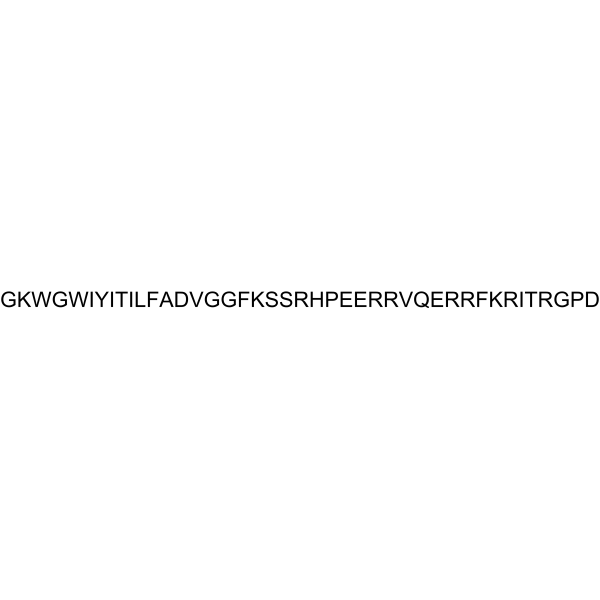
PP113 is an antimicrobial peptide is active against Gram-negative and Gram-positive bacteria, E.coli (MIC: 73.3 uM), B. subtilis (MIC: 23.3 uM), S. aureus (MIC: 13 uM), S. lutea (MIC: 16.7 uM), and B. pumilu (MIC: 23.3 uM) .
loading...
    loading...
Cat. No.: HY-P5560
CAS No.: 1099486-04-0
Target:  

Bacterial

Research Areas:  

Infection

PP13 is an antimicrobial peptide, and is active against Gram-negative and Gram-positive bacteria E.coli (MIC: 16.7 uM), B. subtilis (MIC: 13.3 uM), S. aureus (MIC: 23.3 uM), S. lutea (MIC: 8.0 uM), and B. pumilu (MIC: 9.0 uM) .
loading...
    loading...
Cat. No.: HY-N3862
CAS No.: 19833-13-7
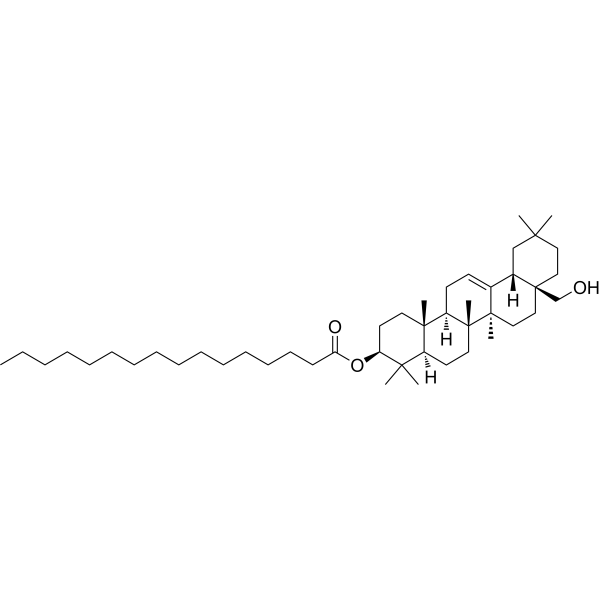
Erythrodiol 3-O-palmitate is a natural product isolated from Dicranostigma leptopodum (Maxim) Fedde, Gentiana rhodantha Franch or Swertia kouitchensis. Erythrodiol 3-O-palmitate has antitumor activity, and inhibits the proliferation of K562 cells with the inhibition rate of 47% at 100 ug/mL .
loading...
    loading...
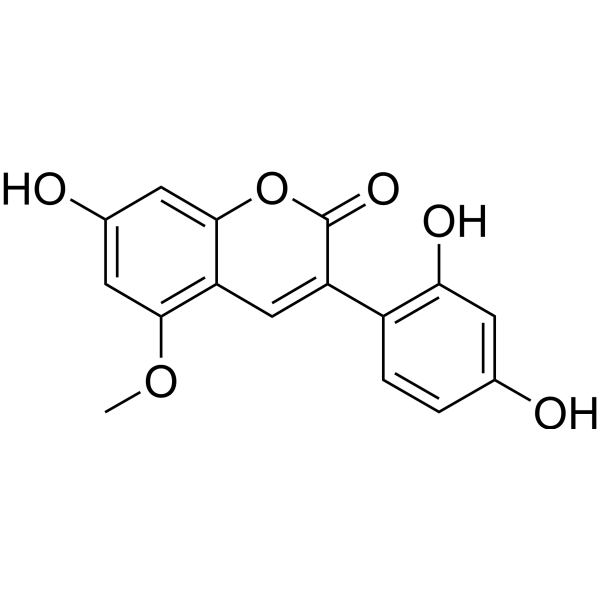
Cat. No.: HY-N2733
CAS No.: 1092952-62-9
7,2',4'-Trihydroxy-5-methoxy-3-arylcoumarin is a coumarin, that can be isolated from campylotropis hirtella (FRANCH.) SCHINDL. 7,2',4'-Trihydroxy-5-methoxy-3-arylcoumarin inhibits PSA secretion in LNCaP cells, with an IC50 of 24.2 μg/mL .
loading...
    loading...
Cat. No.: HY-165154
CAS No.: 35663-85-5
Synonyms: Desdanine; Pyracrimycin A
Cyclamidomycin (Desdanine) is an acrylamide antibiotic with antibacterial activity. Cyclamidomycin inhibits nucleoside diphosphate kinase and pyruvate kinase (in E. coli) and oxidative phosphorylation in rat liver mitochondria. Cyclamidomycin is active against S. aureus, M. flavus, S. lutea, B. subtilis, E. coli, S. flexneri, S. typhosa, P. vulgaris, and K. pneumoniae (MICs=3.12-25 mg/ml) .
loading...
    loading...
Cat. No.: HY-127020
CAS No.: 108605-51-2
Target:  

Bacterial

Research Areas:  

Infection

Deoxyenterocin is a bacterial metabolite originally isolated from Streptomyces that has diverse biological activities, including antibiotic, antiviral, and antioxidant properties. It inhibits the growth of S. lutea, S. aureus, K. pneumoniae, and V. percolans in vitro when used at a concentration of 500 μg/mL. Deoxyenterocin (50 μg/mL) inhibits the cytopathic effect of influenza A H1N1 virus by 60.6% in vitro. It also prevents hydrogen peroxide-induced decreases in glutathione (GSH) levels and in the mitochondrial membrane potential in mouse primary cortical neuronal cultures when used at a concentration of 1 μM.
loading...
    loading...

